🎗️Using AI to detect breast cancer

 
25 February 2026View in Browser


Hello,


India's technology industry is seeing strong momentum, with an estimate revenue of $315 billion in FY26. However, headcount increased by just 2.3%, revealing that AI is driving the growth in the industry.


In its Annual Strategic Review 2026, Nasscom said FY26 marked a decisive inflection point for India’s tech industry, where AI moved from experimentation to changing how businesses operate.


Meanwhile, tech employees have a greater chance of a salary increase at India’s global capability centres or GCCs. Overall salary increments across India Inc. are projected at 9.1% in 2026, according to the EY Future of Pay report.


GCCs are set to lead salary growth in 2026 with projected increments of 10.4%, reflecting sustained global demand and investment in specialised digital capabilities. AI skills, in particular, are expected to be in high demand.


Speaking of AI, will the tech be the ‘Hindenburg’ of our times?


According to Michael Wooldridge, a professor of AI at Oxford University, the race to get AI to market has upped the risk of a Hindenburg-style disaster that could shatter the world’s confidence in the technology.


ICYMI: IBM’s worst trading day since the dot-com crash, thanks to a blog post from Anthropic. 


In today’s newsletter, we will talk about 

  1. Using AI to detect breast cancer

  2. Building credit models for India's informal economy

Here’s your trivia for today: Minsk is the capital of which European country?


Social impact
Using AI to detect breast cancer

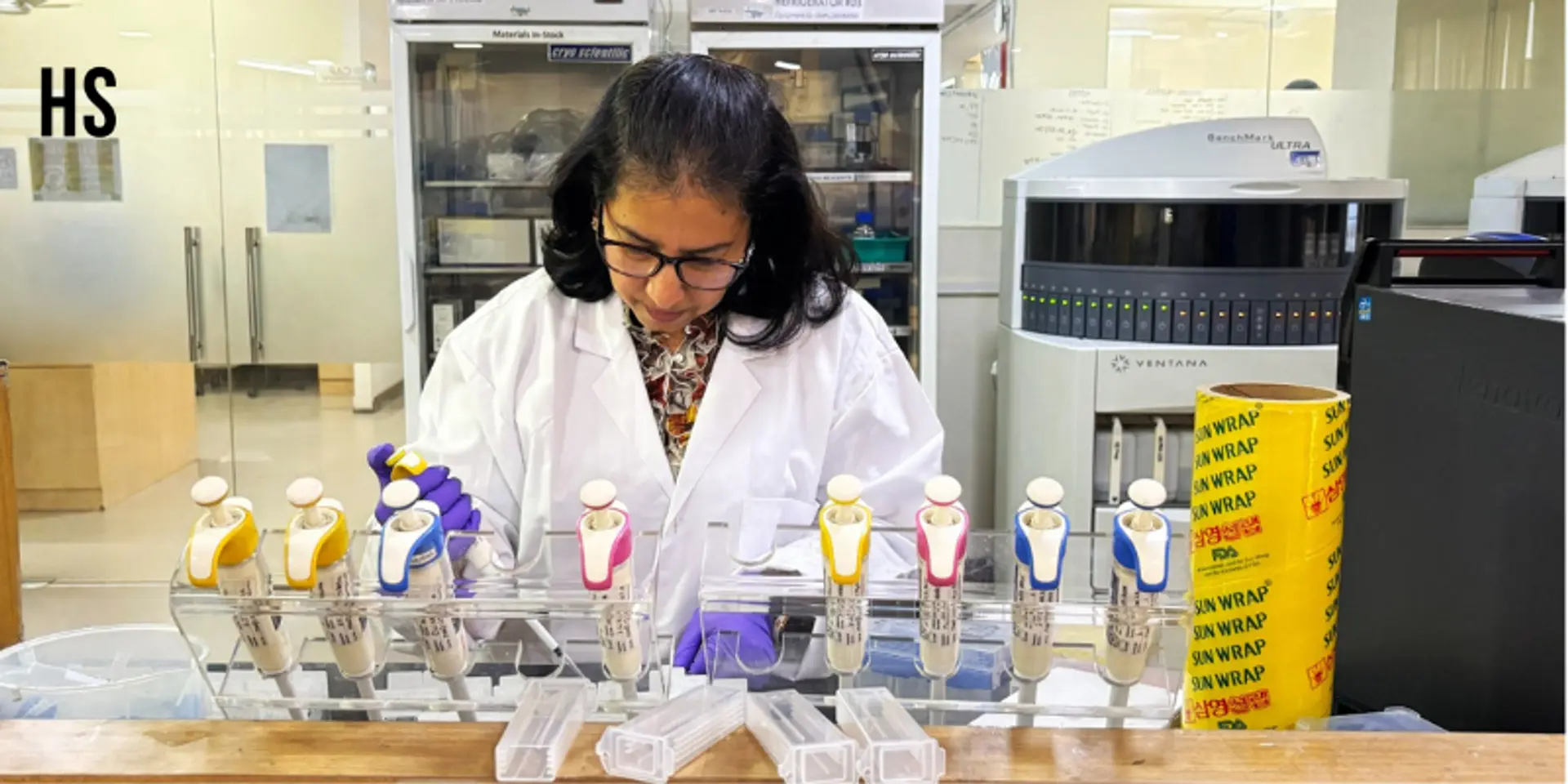
OncoStem Diagnostics, founded by IISc scientist Manjiri Bakre, has developed CanAssist Breast (CAB), an AI-powered test to identify which early-stage breast cancer patients need chemotherapy and those who don’t.


Bakre points out that today, 95% of patients with a two-centimetre tumour are getting chemotherapy, but its benefit is only for patients who are at risk of metastasis, which is under 30% of those patients; the majority are being over-treated.


Key takeaways:

  1. Breast cancer is the most common cancer in women in India. According to the National Cancer Registry Programme, breast cancer cases in India rose from 2.13 lakh in 2021 to nearly 2.4 lakh in 2025.

  2. Bakre started OncoStem Technologies in 2017, whose flagship test, CanAssist Breast (CAB), analyses a panel of protein biomarkers from a patient’s tumour sample and combines this with clinical factors such as tumour size, grade, and lymph node involvement.

  3. Using an AI-driven algorithm, the test generates a recurrence risk score from 0 to 100, categorising patients as low or high risk of cancer recurrence over five years.

Know More


Funding Alert


  1. Wishlink: $17.5M | Series B
  2. XFlow: $16.6M | Series A
  3. HireBound: $2M | Seed

Startup
Building credit models for India's informal economy

Workers in India’s informal sector suffer from credit crunch. The problem isn't their creditworthiness. Banks and NBFCs lack the tools to assess risk in an economy where income is seasonal, documentation is sparse, and a moderate salary in Tamil Nadu differs significantly from that in Jharkhand. 


Traditional credit bureaus can't distinguish between a hawker needing working capital and a dairy farmer with a steady income who can repay loans. Faced with uncertainty, the system sends out a rejection. That's the gap Kaleidofin is working to fix.


Key takeaways:

  1. Founded in 2017 by Sucharita Mukherjee and Puneet Gupta, Kaleidofin builds credit assessment tools specifically designed for the informal sector.

  2. The Chennai-based fintech uses AI and machine learning to help banks and NBFCs assess customers who fall outside traditional credit scoring, expanding access while managing risk.

  3. Kaleidofin's core offering is the "ki score", a credit assessment tool that pulls from a much wider data set than traditional credit bureaus: demographic information, geography, payment patterns, savings behaviour, and alternative data sources, including satellite imagery, rainfall patterns, crop types, and livestock counts for farmers.

Know More


News & Updates


  1. Soaring profits: Abu Dhabi’s Etihad Airways said it saw an almost 50% jump in net profit to $698 million last year, as increased capacity supported strong demand across markets. The carrier added 29 new jets during the year through deliveries from both Boeing and Airbus, along with the return to service of the A380.
  2. Chip deal: Advanced Micro Devices has agreed to sell up to $60 billion worth of AI chips to Meta Platforms over five years in a deal that allows the Facebook owner to purchase as much as 10% of the chip firm.


Did you know?


Minsk is the capital of which European country?


Answer:
Belarus


We would love to hear from you! To let us know what you liked and disliked about our newsletter, please mail nslfeedback@yourstory.com


If you don’t already get this newsletter in your inbox, sign up here. For past editions of the YourStory Buzz, you can check our Daily Capsule page here. 


FeedbackUnsubscribeNewsletters


Post a Comment

Previous Post Next Post

Contact Form