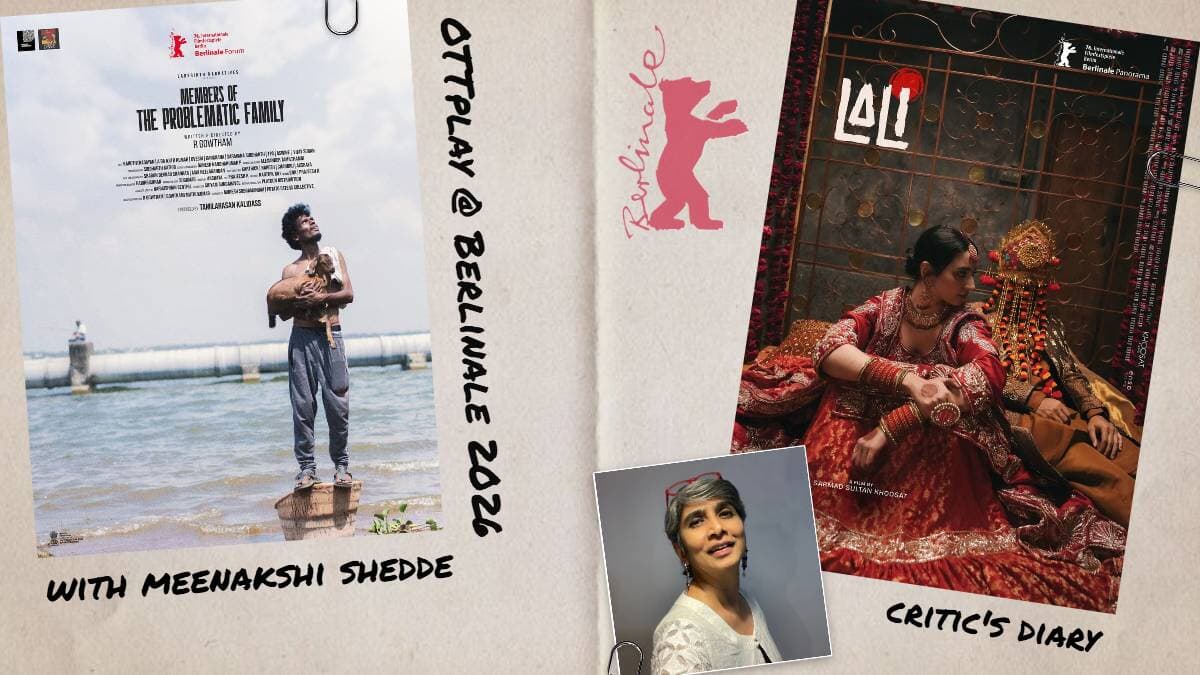
Award-winning film critic and curator Meenakshi Shedde shares her notes on two compelling films from the 2026 Berlin Film Festival: Lali by Sarmad Sultan Khoosat, and R Gowtham's Members Of The Problematic Family.
|
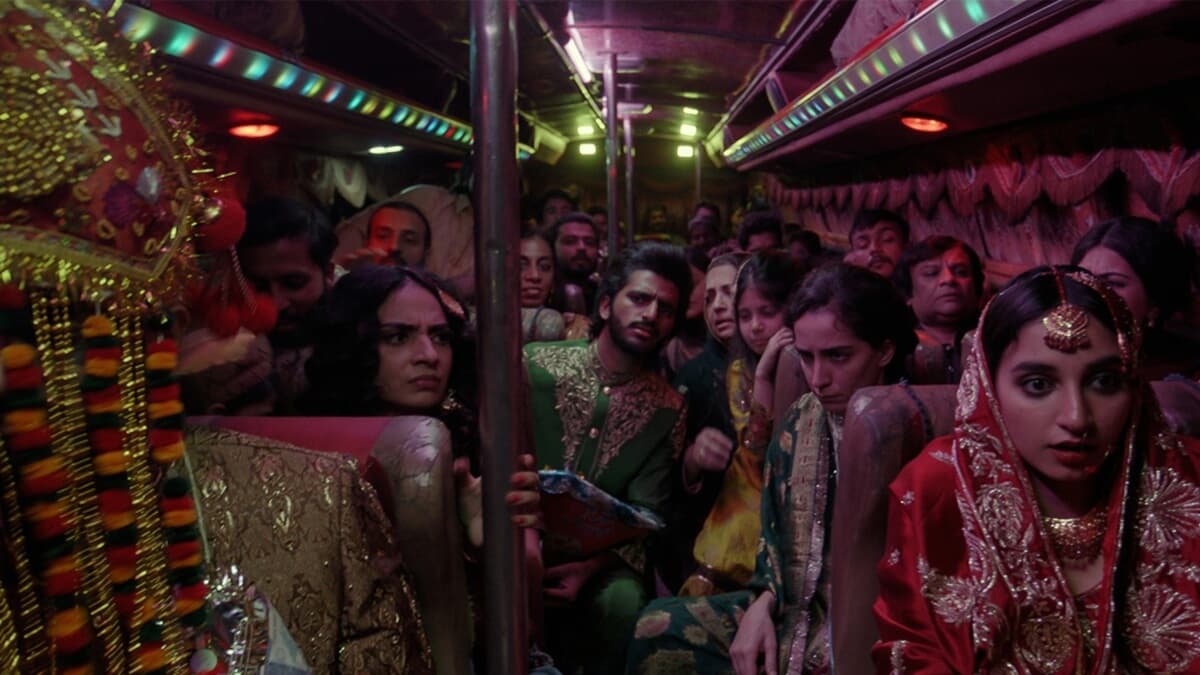
SARMAD SULTAN KHOOSAT’s Lali is a visually stunning feature that got a long ovation from a full house at its world premiere in the Berlin Film Festival’s Panorama section. You’ve simply never seen a film like this from Pakistan — or even India: it careens cheerfully at high speed between genres like highway trucks at night — part riotous comedy, part-horror, part musical, but mainly, it explores the very dark spaces that marriage, and sex, can quickly descend into — imbued with scorching desire, and burdened by social expectations, jealousy, abuse, violence, past traumas — and superstition. Marriage in South Asia is a basic inevitable ABC of life — you do studies, get a job, get married, but no one warns you it can be a poison pit — not even those wallowing in poison. Lali premiering at the Berlinale is a significant international break for Sarmad Sultan Khoosat — director, producer, actor and writer — with a very unique, original and courageous voice, and an obsession for dark, twisted stories of thwarted love. Following his Manto, his Zindagi Tamasha (Circus of Life) won the Kim JiSeok Award at Busan Film Festival, 2019; Joyland, which he produced, won the Jury Prize at Cannes’ Un Certain Regard and was on the Oscar shortlist 2023. Both Zindagi Tamasha and Joyland were Pakistan’s Oscar entries; his Kamli was at IFF Rotterdam 2023. |
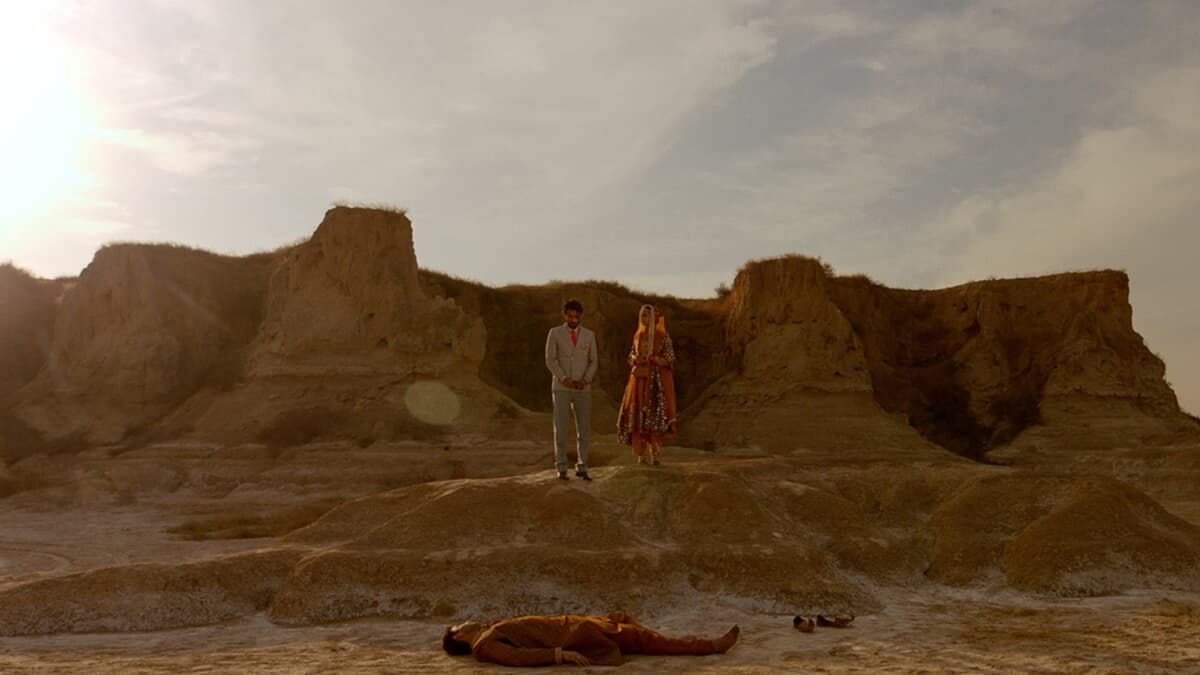
The film opens with the wedding of Sajawal (Channan Hanif) and Zeba (Mamya Shajaffar) in a small town in Punjab, Pakistan — with the bride in intense red and gold — and the groom’s feisty mother Sohni Ammi (Farazeh Syed) who orders the baraat to shoot pistols in the air in celebration — SOP for Punjabi weddings — a bullet from which accidentally hits her, but she cheerfully survives it. The bride is said to be cursed: three of her suitors died before the wedding, and Sajawal jokes he will survive her curse. Although Zeba is a stunningly beautiful bride, pliant and bold by turns, Sajawal blames her for agreeing to the arranged marriage. There is an explosive combustion of desire — in spectacular desert landscapes — but their feet seem to be in quicksand. Soon a deep loathing of himself and her takes over — he’s insecure and haunted by a large red birthmark on his face, painted over in black — and jealousy. Two scenes are hard to forget or forgive: when she brings him a glass of milk, he spits the milk on her face; later, he hangs from an overhead bar, and twists her head between his thighs in an act of graphic sadism: worse follows as his past traumas surface. Indian and South Asian wives are essentially Bagheeras, whose lives are devoted to raising the man cubs they have married. When Sohni Ammi passes away, she is buried in their yard, but Sajawal isn’t by her body, but pouncing on his wife for sex upstairs. |
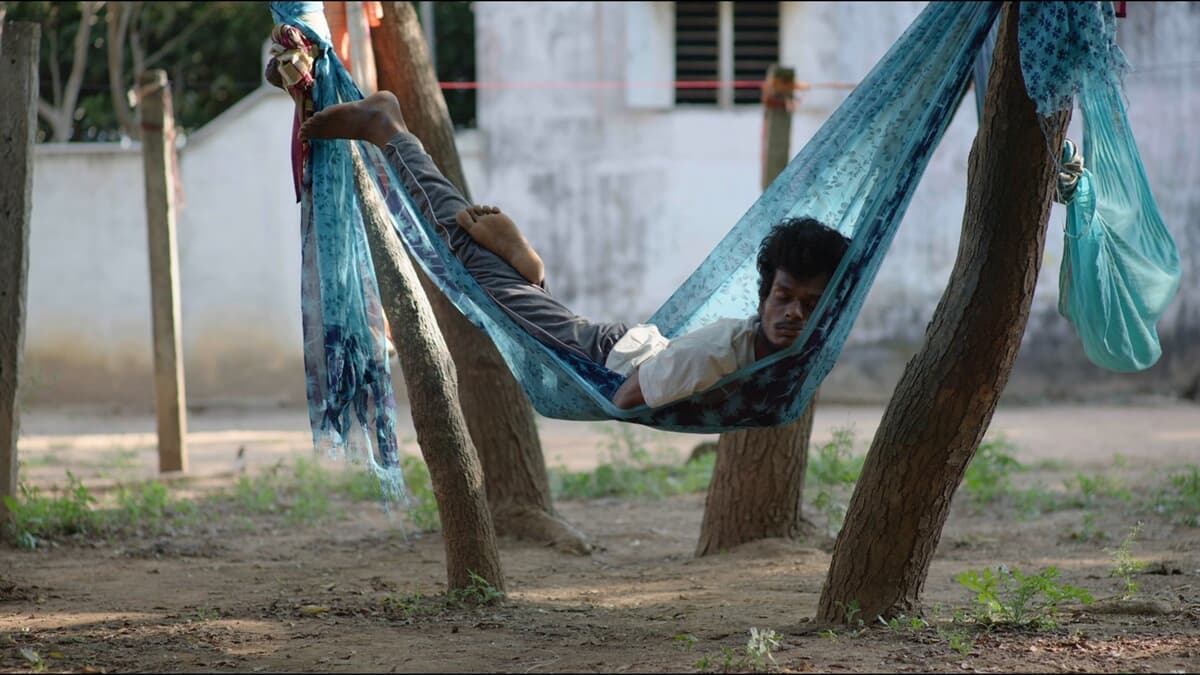
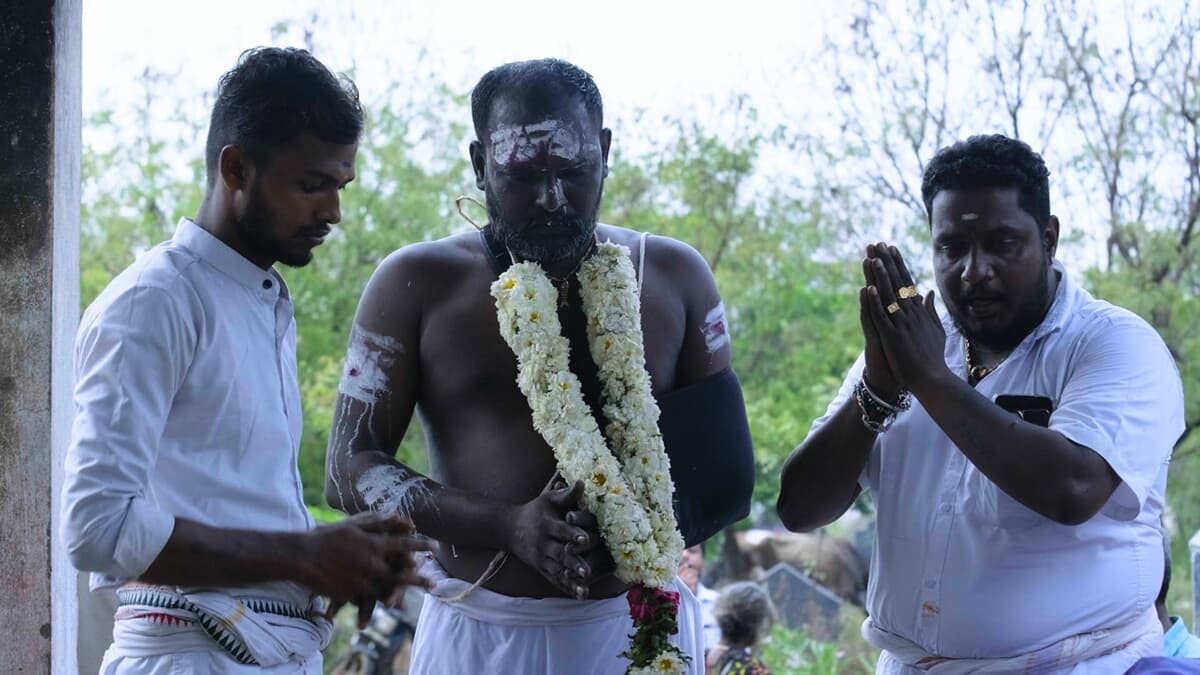
| | R GOWTHAM’s Tamil debut feature Members of the Problematic Family created a stir at the Berlin Film Festival, where it was shown in the Forum section, meant for the more experimental films. The film is about a troubled young man, Prabha, who is mentally disturbed following alcoholism, and behaves erratically, stealing something here, or grabbing a sleeping baby from home and placing it on a busy road, putting its life at risk. He dies early on in the film. Following his funeral, Gowtham opens the lens of the story wider to examine his apparently normal family and community more closely. He reveals how the ‘normal’ family is far more deliberately violent and dangerous, than Prabha — marked as a sometimes dangerous moron, who is not fully in control of his senses. It is also a comment on how our society normalises or glosses over violence of various kinds — extreme violence like death, physical abuse, emotional and psychological abuse. A family member, a police officer, even coolly arranges for someone to “disappear” — then threatens to commit suicide if there’s a post-mortem — and effortlessly gets away with it, commenting on the butter-like pliability of Indian laws. At the funeral of the young man, which seems more like a ritual to be completed, few seem to genuinely mourn him, most see him as a nuisance. But there’s a poignant moment when the mother, who constantly cursed him when he was alive, wails that she feels “abandoned” with his passing away: exhausted from picking up after him and rescuing him and others from distressing situations he created all the time, she remembers her love for him only after he is gone. |
In fact, the film explores the close connection between love and abuse, and even crime. And how alcoholic or psychologically disturbed family members in India are mostly not taken for diagnosis and treatment, causing the entire family to be disturbed or distressed in turn, and so the family pathology spreads quickly. In its exploration of the close relationship between love and abuse or crime, it reminded me of Ameer Sulthan’s Paruthiveeran, also in Tamil, that we had in in the Berlinale’s Forum way back in 2008. Starring Karthi and Priyamani — it was Karthi’s first film, this very violent but masterly film, had even won the NETPAC Award Special Mention for Best Asian Film in the Berlinale Forum. There have been many other Tamil films at the Berlinale, including Mani Ratnam’s Alaipayuthey (2001); Vinothraj PS’s Kottukkaali (The Adamant Girl, 2024); Amma & Appa by Franziska Schönenberger and Jayakrishnan Subramanian, Perspektive Deutsches Kino, 2014; Pradeepan Raveendran’s A Mango Tree in the Front Yard, France, short, 2009; and Enakkum Oru Per (I Too Have a Name), by Suba Sivakumaran, USA/Sri Lanka, short, 2012. This reflects a small surge in contemporary Tamil films selected at Berlin, including in the generation younger to Mani Ratnam, Vetri Maaran and others, as well as from Tamil diaspora, and Tamil films are at other festivals too, of course. |
| | Meenakshi Shedde (Facebook | Instagram) is a National Award-winning film critic, journalist, curator and global influencer, shaping opinions on South Asian cinema worldwide since 40 years, based in Mumbai. She has been curator/programmer to TIFF Toronto, Berlin and film festivals worldwide. She has been jury member of 25 film festivals, such as Cannes, Berlin and Venice, including the jury of Cannes’ Semaine de la Critique (Critics’ Week) 2023, and was also Golden Globes international voter. |
Like what you read? Get more of what you like. Visit the OTTplay website or download the app to stay up-to-date with news, recommendations and special offers on streaming content. Plus: always get the latest reviews. Sign up for our newsletters. Already a subscriber? Forward this email to a friend, or use the share buttons below ⤵︎ |
| | This weekly newsletter compiles a list of the latest (and most important) reviews from OTTplay so you can figure what to watch or ditch over the weekend ahead. |
| Each week, our editors pick one long-form, writerly piece that they think it worthy of your attention, and dice it into easily digestible bits for you to mull over. |
| In which we invite a scholar of cinema, devotee of the moving image, to write a prose poem dedicated to their poison of choice. Expect to spend an
hour on this. |
| | Hindustan Media Ventures Limited,
Hindustan Times House, 18-20,
Second Floor, Kasturba Gandhi
Marg, New Delhi - 110 001, India |
DOWNLOAD THE OTTPLAY APP ▼ |
| | If you need any guidance or support along the way, please send an email to ottplay@htmedialabs.com . We’re here to help! |
©️2026 OTTplay, HT Media Labs. All rights reserved. |
| | |