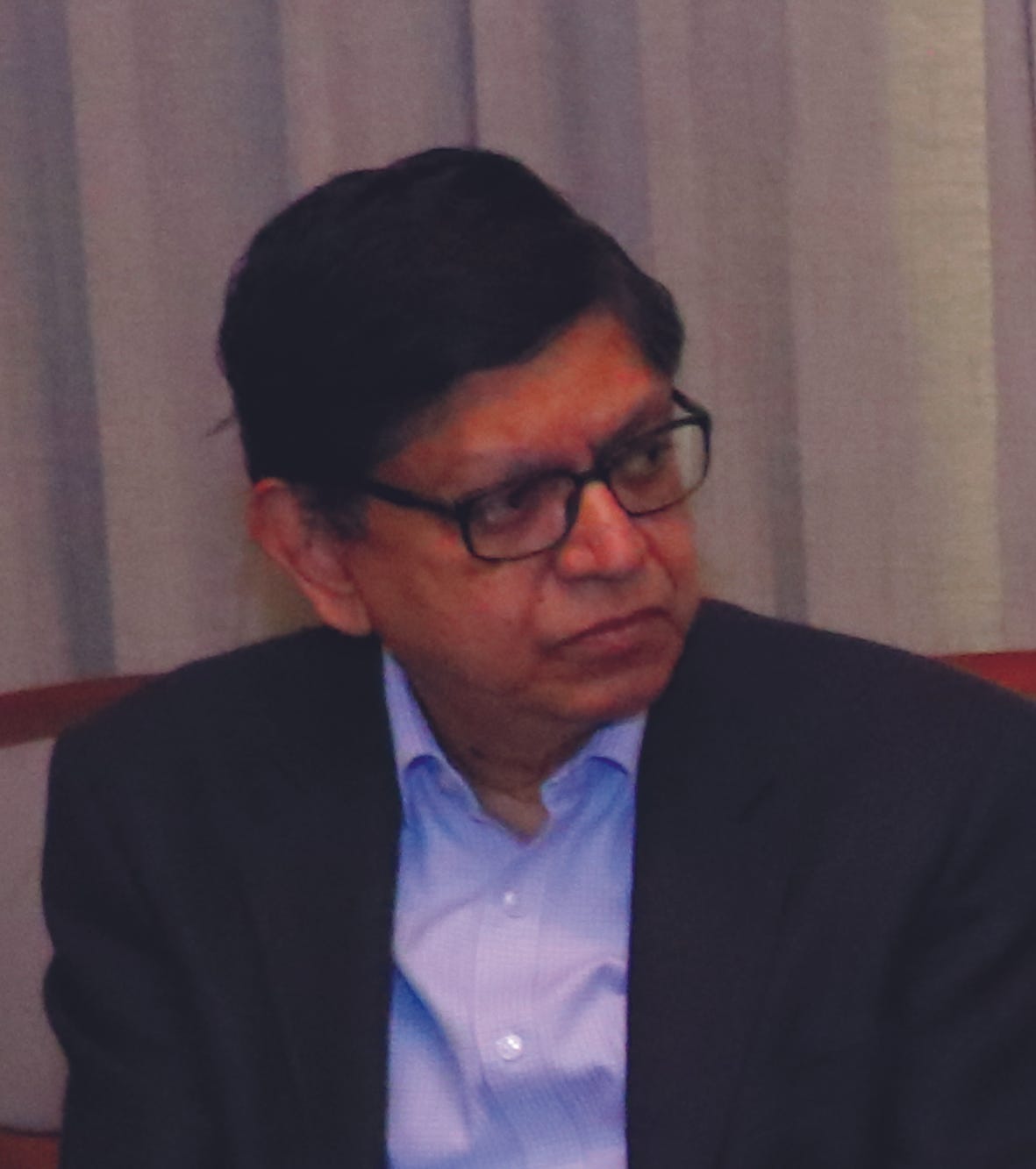
Watching Vivek Ramaswamy trying to pull off a Rishi Sunak in the United States is both entertaining and thought provoking. It is entertaining to us in India as we can watch without having to worry about being actually ruled by him. And in the fantasy world of predicting American presidential elections, it is not impossible to work out a scenario where circumstances could push him to the top, just as it did Rishi Sunak. Positioning himself as the primary Trump surrogate, Ramaswamy would hope to benefit the most if Trump’s legal issues make it difficult for the former president to contest. The Ramaswamy fantasy could go a step further if the general American concern about its ageing leaders extends to President Biden. And even if the fantasy does not go all the way, there is already speculation that he could be Trump’s running mate.
Beyond the fascination of American presidential elections, though, there is a more interesting aspect of Ramaswamy’s candidature. By positioning himself as more Trumpist than Trump, Ramaswamy is targeting the extremist White Christian vote, and he is doing so while celebrating the fact that he is a practicing Hindu. While other American politicians of Indian Hindu and Sikh origin have adopted Christianity, or come from families that have done so, Ramaswamy has no hesitation in displaying his Hindu credentials. He is taking a page out of the Rishi Sunak book, who too chooses to elaborately exhibit his Hindu credentials, whether in terms of practices at 10 Downing Street or by loudly proclaiming Hindu chants at a gathering at Cambridge, England. And this has not held him back on his path to the leadership of the extremist wing of the British Conservative party.
The phenomenon of extreme right wing Hindu nationalists gaining traction within the extreme Right of both Britain and the United States may appear paradoxical. The right wing in both countries is, arguably, much more into identity politics than it has been in the past. The hostility of the extreme sections of the British Conservative party to Blacks is obvious in their positions on immigration. And to the extent there is a targeting of Blacks in the United States it is often marked by support from White Christian extremist groups. That these groups, with their often-aggressive pursuit of Christianity, are willing to not just tolerate, but support, practicing Hindus in their leadership, is a pointer to just how little the practice of religion matters in identity politics.
Identity politics is around the fight for dominance of identity groups. These identity groups can be, and often are, built around religious identities, but the search for dominance would gain precedence over the demands of religious practices. When the pursuit of dominance requires actions that would go against religious texts, there are no prizes for guessing which influence would win. The Hindu epic, Mahabharata, may be about how five Pandavas overcame the might of a 100 Kauravas, but that does not stop Hindu nationalists in India from taking extreme majoritarian positions. If conservative politics in Britain requires extreme positions against Black immigrants, the moral edge can be retained by having it done by a non-white leadership. In taking forward an aggressive anti-Black immigrant initiative, the conservatives may well believe they would lose less of their moral edge if it was done by a non-white with different religious beliefs. Vivek Ramaswamy is also positioning himself as someone who can carry out the extreme agenda of Trump’s White extremist followers, without the resistance that a White leader may face.
The Sunak-Ramaswamy approach may appear to be unique, but it has more history to support it than is usually recognized. The use of an intermediate identity group to carry out the more morally difficult tasks of the politics of identity dominance is not new. British colonialism in India, in fact, institutionalized this process. As the costs of maintaining colonial power grew in the first half of the nineteenth century, the British decided they needed a local intermediary group of Indians to carry out the tasks of colonialism. In his famous minute in 1835, Thomas Babington Macaulay argued: “We must at present do our best to form a class who may be interpreters between us and the millions whom we govern, a class of persons Indian in blood and colour, but English in tastes, in opinions, in morals and in intellect.”
The British were extremely successful in creating such a class. They were helped by the existing caste system and the role of the Brahmins within it. The Brahmins already played the role of interpreters of religious texts for the masses. The British first ensured that the practices of this caste were made consistent, where necessary, with those of the Victorian era. They imparted knowledge of the English language and the norms of Victorian morality. The traditional intellectual dominance was then extended to the British administrative system, from positions as clerks to the membership of the elite Indian Civil Service. The new Brahmins, who were English in tastes, opinions, morals, and intellect, emerged as the local class that carried out the project of colonialism. They were the representatives of colonial power even as they were distinct from the British. The British could present themselves as benevolent dictators even as the brunt of the local opposition was to be faced by the Brahmin-led bureaucracy.
It is tempting to trace the Sunak-Ramaswamy project to their Indian roots. Ramaswamy’s ancestors were Tamil Brahmins, and Tamil Brahmins were a dominant group in the colonial bureaucracy. And it is quite possible that Ramaswamy learnt some of the ropes of being an intermediary in the wielding of power during social conflict at home. But that would only be one part of the story. The need for these intermediaries in Britain and the United States is also a commentary on the changing social fabric in those countries.
Britain and the United States developed in the twentieth century as champions of western democracy. They fought two world wars and lost millions of lives in defending their ideas of democracy. Their democratic ideals have been institutionalized into their political systems and celebrated in their cultural domains. But this system now faces the challenge of globalization. Their dominance in financial capital allows the two countries – especially the United States – to benefit vastly from globalization. But globalization in its broader sense is not about the hypermobility of capital alone. The revolution in mobility technologies that has quietly accompanied the communication revolution has simultaneously ensured much greater international migration, both legal and illegal. The right wing in both countries would ideally like the benefits of capital-led globalization without having to share them with those who have entered the two countries during the process of labour-led globalization. They would like access to markets across the world, while limiting migration from the rest of the world to Britain and the United States. The difficulty is that the extreme steps they would like to take to prevent immigration – such as sending illegal immigrants to Rwanda – go against the entire ethos of openness that they have championed through the twentieth century and, more important, need for their pursuit of finance-led globalization.
One way out of this contradiction would be to get an intermediary class who – to paraphrase Macaulay – would act as interpreters between the socially dominant groups in these countries and millions they seek to govern both within their countries and outside. Global upper caste Hindus are eager candidates for this role. With centuries of practice behind them they intuitively know how it is to be done. By aggressively displaying their Hinduism to a non-Hindu audience they are establishing that they are different from those whose support they seek. They can then afford to take extreme positions their White supporters would hesitate to take themselves. Their extremist right wing White supporters can get the benefit of extreme positions without being directly seen to be taking culturally unacceptable positions. Commentators on the first Republican debate seemed to think Vivek Ramaswamy went overboard and was close to being unbearable, but that did not hurt his numbers at all. There is the bonus of their Hindu origin being celebrated in the world’s most populous country. Rishi Sunak is treated as a hero in India for his public demonstration of his Hinduism, even as he champions laws that would make it difficult for people like his ancestors to migrate to Britain. Vivek Ramaswamy is developing a similar agenda as he champions limits on immigration that would have kept people like his parents out of the United States. The Sunak-Ramaswamy agenda in Britain and the United States is very similar to the role played by Brahmins in colonial India. And they no doubt believe that if it could be done for the British in colonial India, it can be done for twenty-first century Britain and America.