| The fallout over a forced kiss by Spanish Football Federation head Luis Rubiales on forward Jenni Hermoso has focused attention on sexism throughout the world with more women saying, enough. Read on... The Big Story The kiss that launched a thousand protests 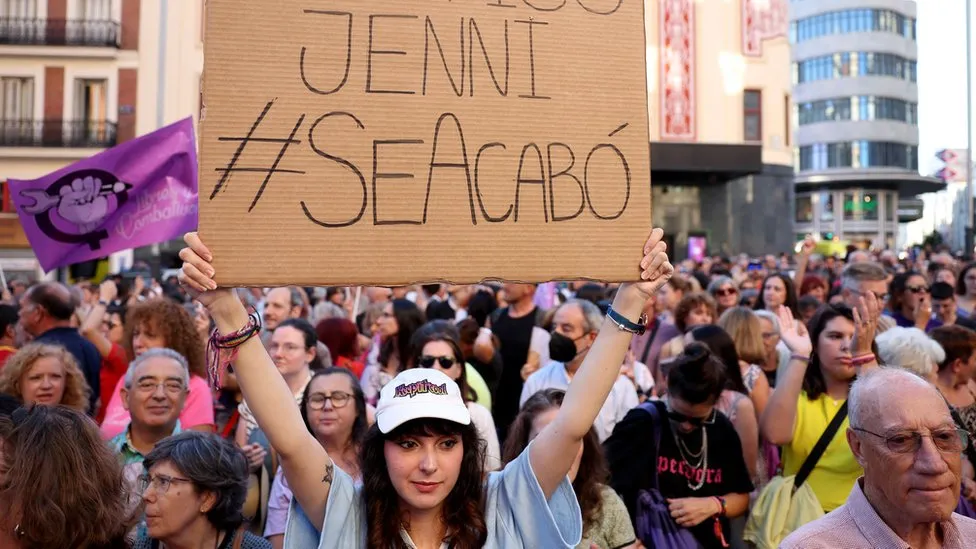 Source:BBC If you haven’t yet heard of Luis Rubiales, let me introduce you to the Spanish Football Federation chief who believes it is his right to scoop up women players, caveman style, when they play well on the field. A man who grabs his crotch in a very male ‘f*** yeah’ moment when the women score a goal because, duh, they are playing for him aren’t they? A man with such minuscule understanding that he cannot comprehend why ‘idiots’ (his word) are angry that he grabbed forward Jenni Hermoso’s head and kissed her on the mouth in public on a stage celebrating her team’s win over England in the World Cup. “Given the turmoil of what the players had been through, this was their moment,” Chloe Saltau, sports editor of The Melbourne Age told me over the phone. “It was a national triumph for Spain and a personal triumph for the players. And the president of the Spanish football federation made it about himself.” In a belated apology, Rubiales claimed it was all heat-of-the-moment stuff that happened with consent (surely the two are a contradiction: if something is spontaneous, how do you obtain consent?) a claim Hermoso disputes. Either way, you need to question the older man’s sense of judgment and propriety. Rubiales’s behaviour has invited worldwide condemnation. The Spanish women’s team has said it will not play until he goes. Striker Borja Iglesias has quit the team. The country’s prime minister said the apology was not enough; deputy prime minister added that the “impunity for macho actions is over”. Heck, even Rubiales's own uncle is on Team Hermoso. Unless you’re Rubiales’s mother, the protests have only grown. Thousands marched in Madrid with banners declaring ‘Se Acabo’ (it’s over). On Thursday, FIFA finally began disciplinary proceedings against Rubiales. At the time of writing, he has said he will not quit. The times they are a-changin’ Women’s sport certainly seems to be having a moment in the sun. Close to two million people watched the Women’s World Cup in Australia and New Zealand in the stadiums. Reuters reports that another two billion watched on TV and streaming devices. It generated $570 million in revenue, second only to the men’s World Cup in Qatar last December. Cuba, a country with even a stronger macho culture than Spain, lifted a ban on women boxing with the creation of a national women’s team in December. All 10 Formula One teams have agreed to field a team in the all-women’s F1 Academy series from 2024. Closer home, the inaugural Tata WPL had the highest viewership for any women’s cricket event with more than 50 million viewers in the first week and 10 million new viewers by the time the tournament ended. There is talk of a women’s kabaddi league. And Hockey India is hosting the Women’s Asian Champions trophy. Issues as sticky as pay parity are still a long way off from reality. But on Thursday, England joined India, New Zealand and South Africa in introducing equal pay for men’s and women’s teams in international cricket. The International Cricket Council, or ICC, have already announced equal prize money for men’s and women’s teams at the ICC events. And, if only to prove a point, on Thursday, a women’s college volleyball match in Omaha, Nebraska broke the record for the highest-attended women’s sporting event in the world with 92,003 in the stands, breaking the previous record held by Real Madrid and Barcelona at the Champions League match last year. 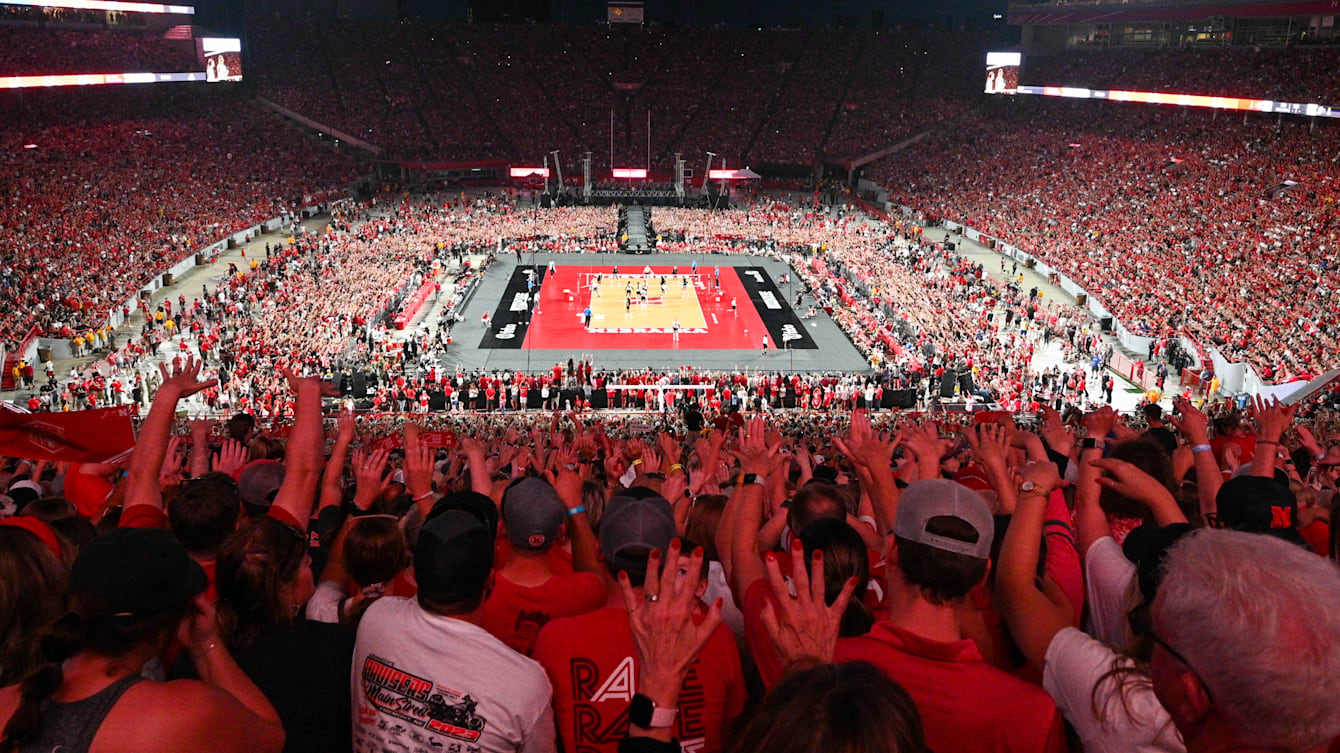 Source: Olympics.com Read Shrenik Avlani in Mint: Will 2023 be remembered as the year women’s sports went mainstream? Finding a voice But more than audiences, media time and pay parity, women athletes today have a voice. In India, Olympic prize-winning women wrestlers took to the streets in an unprecedented public protest that led, finally, to the filing of a police charge-sheet against Wrestling Federation boss Brij Bhushan Sharan Singh. Charged with sexual abuse, Singh is still a long way off from facing justice; his enormous political clout—he remains a BJP member of Parliament and is still to be censured by a single person in his party—makes this a somewhat lopsided battle. So what does Rubiales’s behaviour tell us? Three things. The first, it tells us of the sexism and misogyny that lies so close to the surface of women’s sport. Even now, there remains a 22% gap between girls and boys who play team sport. Women are a minority in coaching. Across the roles of CEO, chair and performance director, just 23% are women. Second—and this is why the incident resonates around the world with so many women—is the casual nature of assault; the tone-deafness; the defiance and the reluctance to believe women even when the evidence is iron-clad. And the third point, the one worthy of celebration, is the emergence of a generation of women players, articulate, strong and unafraid. Across the pond, Megan Rapinoe, probably football’s finest advocate for why girls should play, called out Rubiales’s behaviour for showing “deep level of misogyny and sexism” in women’s football. There’s a sisterhood on display and it transcends borders and team rivalries. In an incredible gesture, England manager Sarina Wiegman who won Coach of the Year, dedicated her award to the Spanish team. “This team deserves to be celebrated and deserves to be listened to,” she said. And then she joined the applause. |