We are in the middle of a groping epidemic, and we aren’t talking enough about it

Trouble viewing this email? View in web browser

Sunday, September 17, 2023
By Namita Bhandare

For women out and about in public spaces, being groped by creepy men is a near universal experience. Why don’t we talk about it enough? Read on.


The Big Story

We are in the middle of a groping epidemic, and we aren’t talking enough about it

It was just another working day for Isa Balado, reporting on a robbery in Madrid, live on TV. That’s when a man approached her from behind. You can see him touch her bottom.

Back in the studio, programme host Nacho Abad noticed. “Forgive me for interrupting you,” he said. “But did he just touch your bottom?”

Indeed he had, confirmed Isa. Abad then asked the cameraperson to put the “idiot on the camera”. The “idiot” was laughing. “I’m doing a live show and I’m working,” Isa informed him. The man denied touching her and walked off. Isa apologised for the interruption. “No, you have nothing to feel sorry for,” Abad told her. And the show went on.

There’s a happy postscript to this story. Later that day, Spanish police announced the man had been arrested for sexual assault.

A groping epidemic

From Madrid to Mumbai, you’d be hard pressed to find a woman who hasn’t been groped in public by a stranger.

I have lost track of the number of times I have been groped by creepy men. On the bus, in markets, walking alone on a deserted road in daytime and even once, years ago, on a train, chair car from Delhi to Mumbai, where the passenger next to me thought it was all right to begin masturbating late at night. I went off in search of the ticket checker and he was good enough to not ask me too many questions and find me an empty seat elsewhere. No other action, as far as I know, was ever taken.

On Sunday, a concert by composer A.R. Rahman in Chennai, Marakumma Nenjam turned out to be India’s highest selling show with 45,000 people in attendance with reportedly mismanaged crowds and near stampede-like conditions.

Several women were assaulted, reported The Quint. A day later, an independent film-maker said she was molested even as she was having a panic attack in the crowd. As she sought help from a man she called anna, or brother, “He looked me in the eye, and the next thing I knew, his hand was on my breasts and I was groped.”

Rahman has promised to look into allegations of mismanagement.

A picture shared by AR Rahman on Instagram (Source: X/@water_menon)

In the air, there is the growing legion of badly behaved male passengers. Every week it seems there is a new story.

On Monday, a man was arrested for sexually harassing his female co-passenger on a Mumbai-Guwahati Indigo flight. After the cabin lights were dimmed, the man allegedly lifted the armrest and touched the woman. She reported the incident to the airline crew, and the man was arrested on landing at Guwahati.

So pervasive is this menace, that in 2017, Air India announced it was setting aside two rows of seats for women.

[I wrote about badly behaved male passengers in an earlier newsletter here]

Making light of it

Even now, the sexual assault of women in public view is euphemistically referred to as “eve-teasing”. The Supreme Court’s recently issued handbook on avoiding gendered terms correctly calls it street sexual harassment.

In fact, touching a woman’s body without her consent is assault that can leave lasting trauma. On Monday, a railway transport worker in UK testified before a court in Sheffield about being touched between her legs and on her bottom by a drunk passenger in September 2021. As someone who loved her job, she said, she was left unable to work on the same route for months after the assault, leaving her traumatised with a loss of confidence.

Even judges can trivialise it. In July, a judge in Italy let off the 66-year-old caretaker of a school for groping a 17-year-old schoolgirl on the ground that it was a “joke” and hadn’t lasted more than a few seconds.

Why do men do it? “It’s a very perverse form of bullying,” says Ajanta De, a Bengaluru-based counselling psychologist. “It’s about power and needing to assert themselves in the knowledge that they will likely get away with it.”

In male-dominated public spaces and in patriarchal societies, there’s a subtext too about showing women their “place”. If women step out to work, study, go out for a walk or enjoy a concert, they must be prepared to face violence and even assault. Charulata Rangarajan, the film-maker who posted a video of her hands shaking a day after being assaulted at the A.R. Rahman concert has been trolled. What had she had expected at a crowded event? After all, everyone knows that women are "fair game" in crowded public spaces.

Talking about it
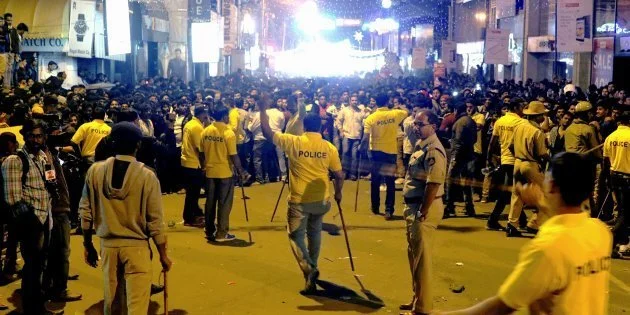
New Year’s eve celebrations in Bengaluru in 2016/17 became a free pass to grope (Source: AP)

In a world grappling with heinous violence against women—one in three face domestic violence, rape and gang-rape data is ghastly—public groping is seen as a lesser evil and (understandably) gets vastly less attention.

But, says De, “Nobody has the right to touch you without your consent.” The first thing to do after being groped is making sure you are safe. “You need to first protect yourself.” But if the conditions are ok, then you need to make it clear that being touched is not acceptable. “You definitely have the right to speak up,” says De.

That is exactly what the journalist in Spain did. And it’s high time that we too said, enough.

I want to hear from you. Have you been groped? How did you deal with it? How can we begin a national conversation making such behaviour unacceptable? Write to me at: namita.bhandare@gmail.com

In Numbers

0 is the number of women awarded the country’s most prestigious science prize, the Shanti Swarup Bhatnagar prize. Announced after a year-long gap, all 12 recipients for 2022 are men. Since the prize’s inception in 1958, only 19 of the 583 awardees have been women.

Source: The Print

We hear you

“They were not languishing all this while. There are some convicts who are more privileged as opposed to others.”

The Supreme Court’s Justice B.V. Nagarathna while hearing a challenge to the remission granted to 11 men sentenced to a life-term for gang-raping a pregnant Bilkis Bano and murdering her family members during the 2002 Gujarat riots.

Can’t make this s*** up

Ruling that watching porn on a phone in private without showing it to others is not an offence, the Kerala high court decided to dispense some parenting advice. So far, so good.

Warning parents against handing over mobile phones to kids and the dangers of the impact on porn on children (sound words), he advised: “Let the children play cricket or football or other games they like during their leisure time,” he said (also sensible).

However, the judge didn’t stop here and went on to extolling the virtues of “delicious food made by their mother” instead of ordering on Swiggy and Zomato. Maybe he didn’t get the Supreme Court’s gender handbook.

Watch

Launched in 2020, The India Love Project, run by my friends and fellow journalists Priya Ramani, Samar Halarnkar and Niloufer Venkatraman has made it to the final 10 for consideration of the 2023 Global Pluralism Award. Selected from 200 submissions from 60 countries, the project celebrates interfaith, intercaste and LGBTQI+ relationships.

What's making news

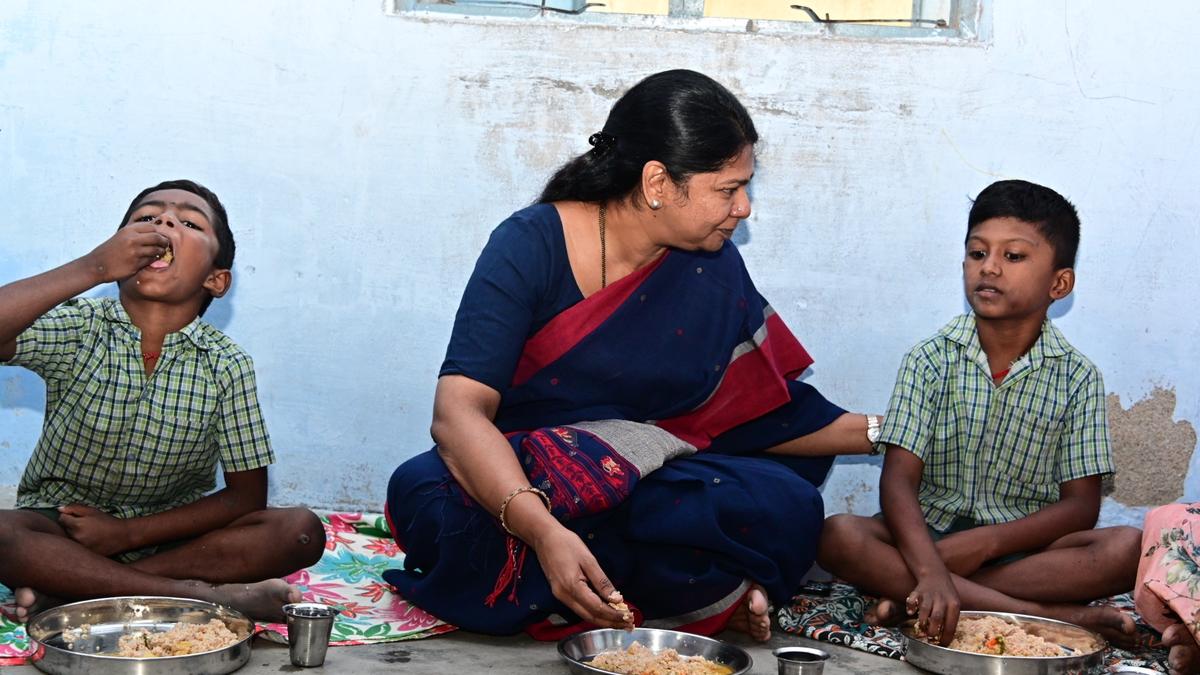
Breakfast at Usilampatti

(Source: The Hindu)

Tamil Nadu chief minister M.K. Stalin’s decision to extend a free breakfast scheme to all 31,000 government primary schools, could only have been classified a winner that would benefit 1.7 million students by reducing malnutrition and increasing attendance.

But at the panchayat union primary school near Usilampatti, S. Muniyaselvi, the Dalit cook reported that only two of the 11 children she was cooking for were actually eating. According to her, the children, belonging to an intermediate caste, were forbidden by their parents from eating food that had been cooked by her. Intervention by the revenue divisional officer, minister P Geetha Jeevan and the local MLA didn’t succeed, with the parents adamant that the Muniyaselvi be transferred out. And then on Tuesday, DMK MP Kanimozhi came to breakfast, sat on the floor and chatted with the parents. Last heard, all the kids will be eating breakfast cooked by Muniyaselvi after all.

Nagaland allows change, well, sort of

After a rap by the Supreme Court in April, the state government has finally said yes to a fresh municipal bill that paves the way for elections to the urban local bodies—last held in 2004—with a 33% quota set aside for women. Tribal groups in Nagaland have consistently opposed the quota for women on the grounds that it is an aberration to tribal law.

But the state assembly this week also passed a unanimous resolution seeking exemption from a proposed Uniform Civil Code. A nation-wide UCC is one of the poll promises that features on the BJP’s manifesto. In Nagaland, the ruling Nationalistic Democratic Progressive Party is in alliance with the BJP and the resolution comes at a tricky time for the alliance.

Field notes

(Source: BBC)

Two-thirds of women working in surgery in the UK have been the target of sexual harassment from colleagues. A third of women, or 29.9%, have been sexually assaulted. And a majority of both women (89.5%) and men (81%) have witnessed some form of sexual misconduct by colleagues.

Some female surgeons were sexually assaulted while operating.

Only 16% impacted by sexual misconduct filed a formal report.

These are some of the findings of a new report in the UK which finds a high prevalence of sexual misconduct in surgery. The Royal College of Surgeons has said the report is “shocking”.

Breaking the Silence: Addressing sexual misconduct in healthcare is the largest survey of its kind. Conducted by the universities of Surrey and Exeter through online surveys with 1,434 participants, 51.5% of them women, from the surgical workforce, it comes at a time when more women than men are entering UK medical schools; in 2022, 62% of entrants were women.

Read more here

Around the world

(Source: Getty Images)

In Manila, Maria Ressa Nobel laureate, has been acquitted of the last remaining tax case filed against her by the Rodrigo Duterte government. Ressa, a fierce critic of Duterte, called her win following a five-year legal battle a “victory for press freedom”. Charges are still pending against the 59-year-old founder of the news website Rappler who has maintained that the charges were politically motivated.

In Iran, days before the first death anniversary on September 16 of Mahsa Amini in custody for wearing a headscarf incorrectly, the government has announced an even stricter dress code under a so-called hijab and chastity bill. Women now face up to 10 years in prison for refusing to comply with the country’s mandatory hijab law. Punishments also include 60 lashes and heavy fines. And, businesses that serve women without a hijab could be shut down.

Ava DuVernay’s new film, Origin, based on Isabel Wilkerson’s landmark book, Caste: The origin of our discontents is already creating a huge buzz—a six-minute standing ovation at the Venice film festival, rave notices at the Toronto film fest—and is being spoken of as an Oscars contender. The film about oppression and discrimination throughout the world also features Dr B.R. Ambedkar, played by academic Gaurav J Pathania.

Watch the trailer here.


Were you forwarded this email? Did you stumble upon it online? Sign up here.

That’s it for this week. Do you have a tip or information on gender-related developments that you’d like to share? Write to me at: namita.bhandare@gmail.com.
Produced by Nirmalya Dutta nirmalya.dutta@htdigital.in.

Get the Hindustan Times app and read premium stories
 Google Play Store  App Store
View in Browser | Privacy Policy | Contact us You received this email because you signed up for HT Newsletters or because it is included in your subscription. Copyright © HT Digital Streams. All Rights Reserved

--
Click Here to unsubscribe from this newsletter.

Post a Comment

Previous Post Next Post

Contact Form